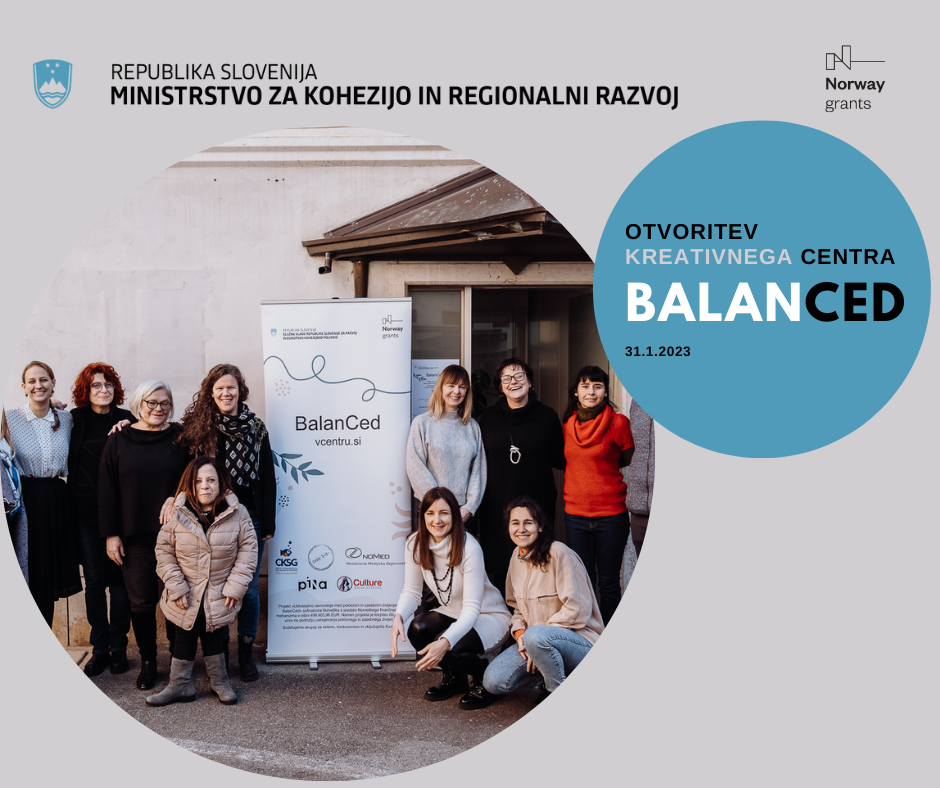
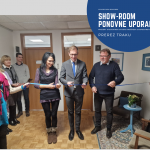
31 January 2023 – The Creative Centre is launched in Koper, with an innovative programme aimed at creating a work-life balance. It is part of the project Creative Work-life Balance (acronym BalanCed), implemented under the programme Education, Scholarships, Apprenticeship and Youth Entrepreneurship. The project promoter is the Center for Communication, Hearing and Speech Portorož and the project partners are the CONA B.P. Institute, the NOMED Institute (and Zelenci movement), thee Association for Culture and Education PiNA and Culture Break Borders (Norway).
Creating an environment where connecting habits such as acceptance, encouragement, listening, cooperation, trust, respect, coordination, creativity and responsibility are developed contributes to greater employee satisfaction, resulting in greater commitment and innovation. Active participation in the present project means just that to us – a new opportunity, a new environment for the development of increasingly satisfied individuals, employees,” said Ms Anja Cerkvenik, acting director of the Center for Communication, Hearing and Speech Portorož.
Ms Mateja Hrvatin Kozlovič, deputy mayor of the Municipality of Koper, also attended the opening, welcoming those present and pointing out that “… both children and adults will have the opportunity to test their creative expression here. Regardless of whether we are stepping into a new, unknown territory for the first time, or whether we are upgrading our creative skills.”
Why do we need creativity? Why be creative? “When we create, we express our feelings, we are in better contact with ourselves, we learn to solve problems, build self-confidence and overcome obstacles. We allow ourselves to be proud when we look at the results of our work and we socialize with like-minded people,” said Ms Barbara Gogala, head of the project.
The premises of the Creative centre were renovated with sustainable materials, whereas an important part of the project is also raising children’s awareness in the field of environmental protection. Ms Katarina Parovel, director of the Nomed Institute: “Children will (and already have) brought colour, playful energy and a lot of laughter to this space. Throughout the project, we will conduct several sets of workshops, some of which we have already conducted. They were aimed at furnishing the space – no, we did not go to the store to get furniture, but to get rid of it. At the handicraft workshops, we involved the children in sanding and painting the chairs, and at the environmental protection workshop, we sewed and upholstered the seats of the chairs together. We repainted the scrap cupboards and sewed aprons for the upcoming workshops. Together, we arranged a space in which we will feel good and will be happy to return to.”
They will soon go out into the field with the children and hold biodiversity workshops for them, discovering together the secrets of nature, both plants and animals. They will also offer thinking workshops that will encourage children to think critically, argue and find compromises through active debates.
With the desire that the content and activities within the Creative centre were tailored to the needs and wishes of the employees and their families, an analysis of their needs was carried out as part of the project. “We invited representatives of employees and employers to the focus groups, and in guided discussions together with them we identified the challenges they face, such as finding suitable care, and we also held focus groups with employers, where we determined what they needed for support employees in harmonizing their professional and private lives,” pointed out Ms Jasna Ratoša, expert associate at Association PiNA.
In the form of free courses and workshops, the Creative centre will offer the acquisition of skills in modelling clay, sewing, making natural cosmetics and photography. It will also offer a programme to strengthen soft skills for employees in organizations, and a diverse programme for children. Now, the activities of the Creative center are already full, but you can follow the upcoming ones on the project’s website and Facebook page.
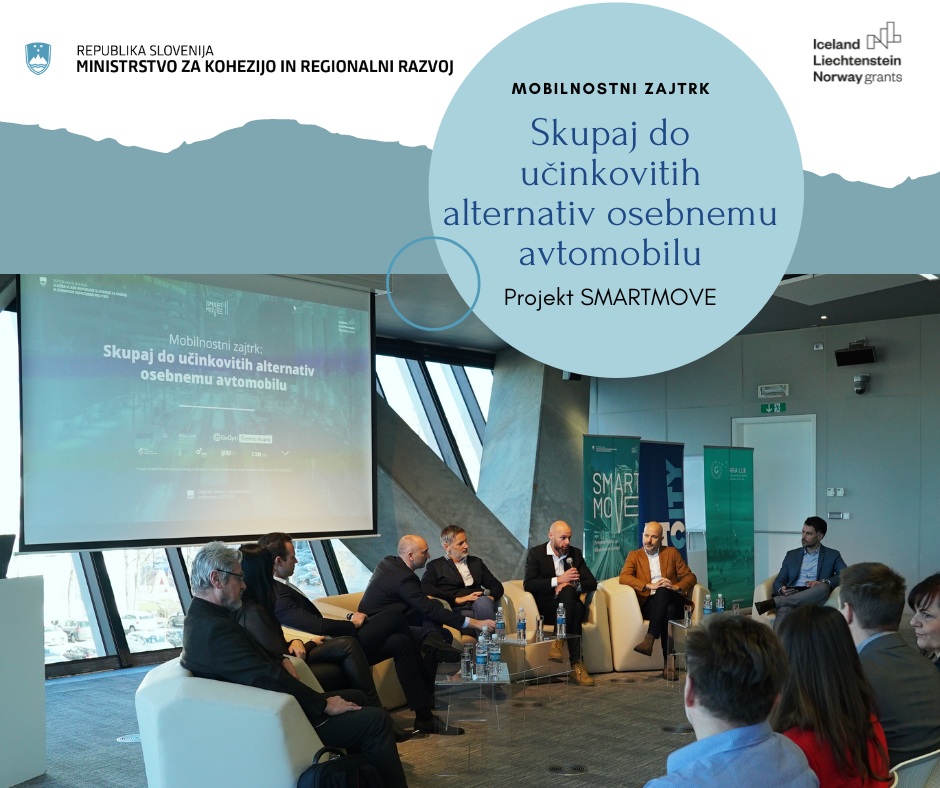
31 January 2023 – A mobility breakfast titled “Together for effective alternatives to the car” was held in BTC’s Crystal Palace as part of the project SmartMOVE: Smart solutions for sustainable mobility, implemented under the programme Climate Change Mitigation and Adaptation.
Sustainable mobility experts, representatives of Ljubljana Passenger Transport, Slovenian Railways – Passenger Transport, Ministry of Infrastructure, and providers of new forms of transport – companies GoOpti, Nomago and Avantcar participated in the roundtable to discuss the potential synergies and find solutions for a multimodal travel system that would allow people to travel efficiently without owning a car.
One of the biggest challenges to sustainable mobility is the mass use of private cars that are used for the travel of only one person. It is the single most common cause of congestion and takes up too much space causing lack of parking spaces, which many people are faced with on a daily basis. It also has a huge environmental impact that will be felt by future generations. The development of a multimodal mobility system that can compete with the efficiency and convenience of a private car is one of the best chances to free ourselves from being trapped in the loop of automobility.
24 January 2023 – We inform that the former Government Office for Development and European Cohesion Policy has been transformed into the Ministry of Cohesion and Regional Development.
As of 24 January 2023, the new Ministry of Cohesion and Regional Development (MCRD) has taken over all the tasks of the former Government Office for Development and European Cohesion Policy (GODC), including the implementation of the Norway and the EEA Grants 2014-2021, as well as the area of regional development.
Project promoters and project partners are invited to take this change into account when implementing projects, including the use of the new Ministry’s logo.
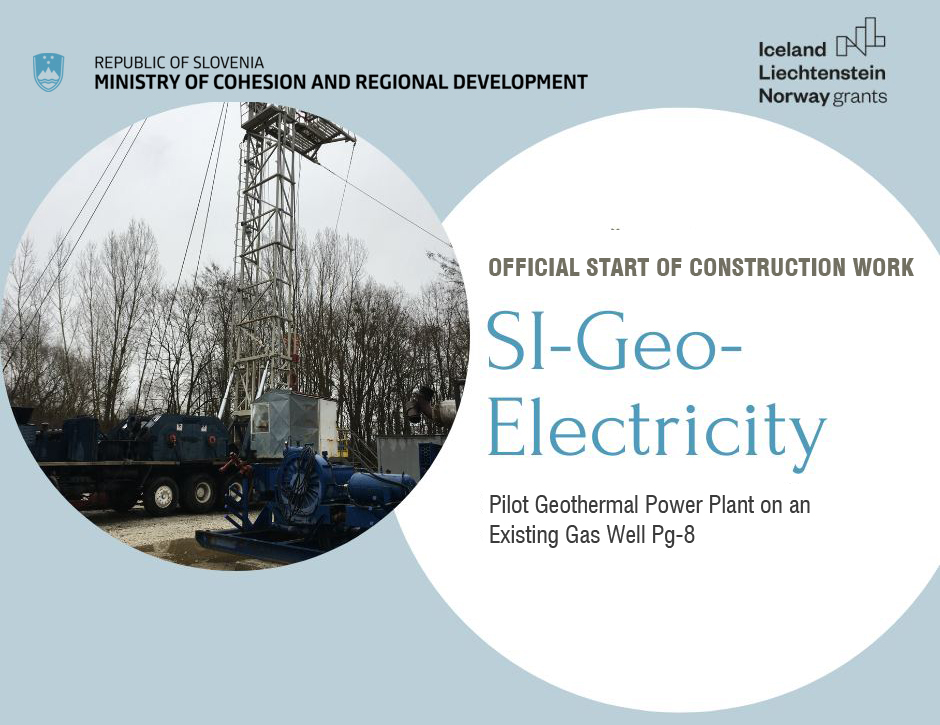
20. januar 2023 – In December, the company Petrol Geo started underground construction work on the abandoned well Pg-8 for the needs of the Čentiba pilot geothermal power plant, for which the Drava Power Plants Maribor – a company in the HSE Group – received a building permit in May last year. The keynote speaker at today’s official start of underground construction work was Dr. Aleksander Jevšek, Minister for Development and European Cohesion Policy.
The pilot geothermal power plant in the village of Čentiba in the Municipality of Lendava will utilise the geothermal energy potential of the existing dry, non-productive well which is approximately three thousand metres long. It is a completely closed system, where the liquid coolant (ammonia) will not come into contact with the overheated rock. The Pg-8 well is cased (steel lining of the well) and cemented, and as such completely sealed. The geothermal power plant at the Pg-8 well will consist of an underground part, i.e. of the geothermal gravity heat pipe, and the above-ground part, i.e. cooling system and engine room.
The underground works include the removal of the existing pipes, for which a special elevator with additional equipment has been mobilised, with which the current installations will be extracted. This will be followed by checking the gas-tightness of the well, installing the geothermal gravity heat pipe and checking the gas-tightness of the space between the pipes in the well. The mentioned underground works are carried out in accordance with the developed mining project.
After the preliminary work has been completed, the activities on the above-ground part of the construction of the pilot geothermal power plant begin, consisting of construction work (construction of three building bases, sewerage, water supply and electrical lines), work on electrical and mechanical installation, technical inspection, modelling and long-term monitoring of test operation and assessment of the geothermal potential of abandoned oil and gas wells in Slovenia and the preparation of guidelines for the development of projects for the construction of innovative geothermal power plants. Start-up tests of the first geothermal power plant in Slovenia are planned for June this year.
In the event of favourable results of the pilot project, the designed concept will be available to be used on other abandoned wells in Slovenia and also around the world. The project therefore represents an important milestone for the development of geothermal energy and the possibility of using abandoned wells around the world.
The keynote speaker Dr. Aleksander Jevšek, Minister for Development and European Cohesion Policy, congratulated the project holder Drava Power Plants and all partners of the SI-Geo-Electricity project, who obtained funds from the Financial Mechanism of the European Economic Area at the public tender of the Environment programme, and emphasised: “I am glad that within the framework of the EEA Financial Mechanism we were able to provide funds for such an important project as the construction of the first geothermal power plant in Slovenia. The innovative pilot project can represent an important milestone for the generation of carbon-free geothermal energy by using abandoned gas and oil wells in Slovenia and throughout the world. It is also an exceptional development opportunity for the Pomurje region. I hope that the project will bring the desired results and that the geothermal potential of NE Slovenia will give a new development impetus to the economy of the Pomurje region and at the same time contribute to the decarbonisation and greater energy independence of Slovenia, which is especially important in these strained situations.”
Janez Magyar, Mayor of the Municipality of Lendava: “The activities within the project “SI-Geo-Electricity – Pilot geothermal power plant on an existing gas well Pg-8, pilot project” are a great opportunity for both Slovenia and the Municipality of Lendava. We started with procedures and activities for the use of geothermal energy in Lendava many years ago and used it in tourism, agriculture and district heating, and now the possibilities for obtaining electricity are also opening up. We want this pilot project to produce adequate results, and we are already planning other daring projects for the use of geothermal potential. In this financial perspective of the EU, there is a great emphasis on such areas, our task is to be brave in our approaches and activities, so that we can take advantage of the possibilities of easier exploitation of this potential. The Municipality of Lendava will be available as a partner to all those who want to find their own opportunity in this area. The greatest interest of the Municipality of Lendava is in the expansion of the district heating network to business entities/facilities and compact settlements in our municipality.”
Damjan Seme, M.Sc., General Manager of the Drava Power Plants Maribor emphasised: “I am proud that the Drava Power Plants Maribor, together with our partners, are also breaking new ground in the field of potential use of deep geothermal energy, and that we have brought the project to the point where construction work could begin.
The specifics of the Čentiba pilot geothermal power plant – rated power of 50 kW and annual production of 400 MWh of electricity – on the abandoned gas well Pg-8 are that it will use a geothermal gravity heat pipe, which enables a closed circuit of the technological medium. One dry well, approximately 30 centimetres in diameter, is required for the operation of the power plant.
On a global scale, it is a market niche in the field of electricity production from renewable sources. The pilot project will be the first application of this principle, which is the fruit of Slovenian knowledge. The implementation of the project represents a new step on the path of development and transition to a low-carbon society. This project is an added value for the local community, as well as for the whole of Slovenia. I am particularly happy that we have combined the knowledge, experience and interest of Slovenian companies with the support of the line ministries and the Municipality of Lendava.”
Štefan Hozjan, M.Sc., Managing Director of Petrol Geo said: “At Petrol Geo, we are proud to be part of the establishment of the first geothermal power plant in Slovenia. As a company, ten years ago we were already part of an important story – the installation of the first heating system with geothermal energy in Slovenia, here in Lendava. And we also continue this story of a green future with this project, which is gaining momentum today. Projects of this kind are important, especially now, when the energy crisis presents us with new challenges that we have not had to deal with until now. And one of the answers to such challenges is also the construction of a geothermal power plant in Slovenia, which will significantly help us to be as energy independent as possible. Of course, this type of project will also be an excellent starting point for all further projects involving wells. And we look forward to these developmental steps in our company because the company Petrol Geo is a development-oriented company which is committed to obtaining green energy from renewable energy sources through its operations. Our wish is that, just as the first well symbolically became the trigger for intensive industrial development in the wider Lendava region in 1943, the first geothermal power plant will also become the trigger for more intensive investment in the development and exploitation of geothermal energy in this area.”
Dr. Miloš Bavec, Director of the Geological Survey of Slovenia, stated: “By participating in the project, GeoZS follows its basic mission: to provide the best possible knowledge of the geological structure of the territory of the Republic of Slovenia and to transfer knowledge to all interested stakeholders for the efficient use of the Earth’s subsurface, taking into account the highest standards of environmental protection.
Previous research in north-eastern Slovenia confirms the extraordinary potential for obtaining geothermal heat using thermal water from a depth of up to about two kilometres. More than 200 deep wells have been drilled in the wider area for oil and gas research or the possibility of their storage, of which about a tenth can “produce” thermal water today. Some wells at depths of around three kilometres reach temperatures of up to 150 °C. The “deep geoprobe” technology, which will be used at Pg-8, does not affect the water balance of geothermal aquifers, but causes a change in the thermal field in the vicinity of the well. Therefore, we will use a local 3D geological and geothermal model to assess its capacity and long-term impact on the subsurface.
We are very pleased to be participating in the project, with which we will very soon confirm and quantify the geothermal potential of Slovenia for the production of geothermal electricity, using existing facilities. At the same time, we will try to facilitate new investment by developing legislative guidelines for the use of such innovative energy systems.
With this successful example, it is worth remembering that many parts of Slovenia at depths below a few hundred metres are still poorly or completely unexplored, therefore investment in new deep wells is very risky. Too many geothermal sources of heat or electricity remain undiscovered and thus we also cause economic damage to ourselves, as we do not use green energy that is easily accessible under our feet and is always available. Therefore, there is an urgent need to strengthen research to improve the knowledge of greater depths, at least in the most promising geothermal areas. Thus, in the near future, geothermal heating plants and power plants could be built not only on decades-old abandoned wells, but above all on new, technologically advanced wells that will optimally serve our needs for decades to come.”
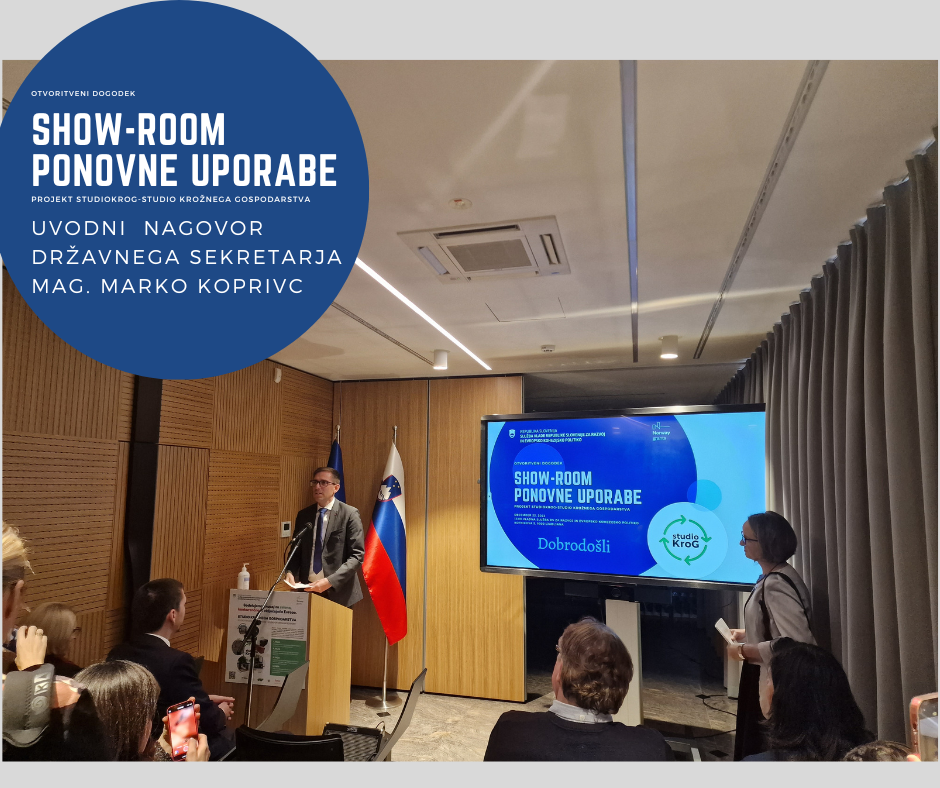
9 January 2023 – The pre-holiday season of December 2022 at the Government Office for Development and European Cohesion Policy was marked by the the opening and handover ceremony of the reuse showroom that was created as part of the co-financed project StudioKroG – Studio of Circular Economy.
The event was opened by State Secretary at the Government Office for Development and European Cohesion Policy, Mr. Marko Koprivc. It brought together, among other guests, the project promoter – Scientific Research Centre Bistra Ptuj, and project partners of the project StudioKroG – Studio of Circular Economy, Reuse Center (CPU), OKP Public utility company Rogaška Slatina, Development Research Center Ormož and Fonix AS from Norway.
“The newly acquired area featuring repaired and refurbished equipment that has been repurposed and given new life is a piece of the mosaic of the circular economy. It is our responsibility and a part of our path to a zero-waste planet,” said State Secretary, Mr. Marko Koprivc, who expressed his satisfaction that the Government Office for Development and European Cohesion Policy sets an example of a responsible attitude towards the environment.
The project StudiKroG is implemented under the programme Climate Change Mitigation and Adaptation.
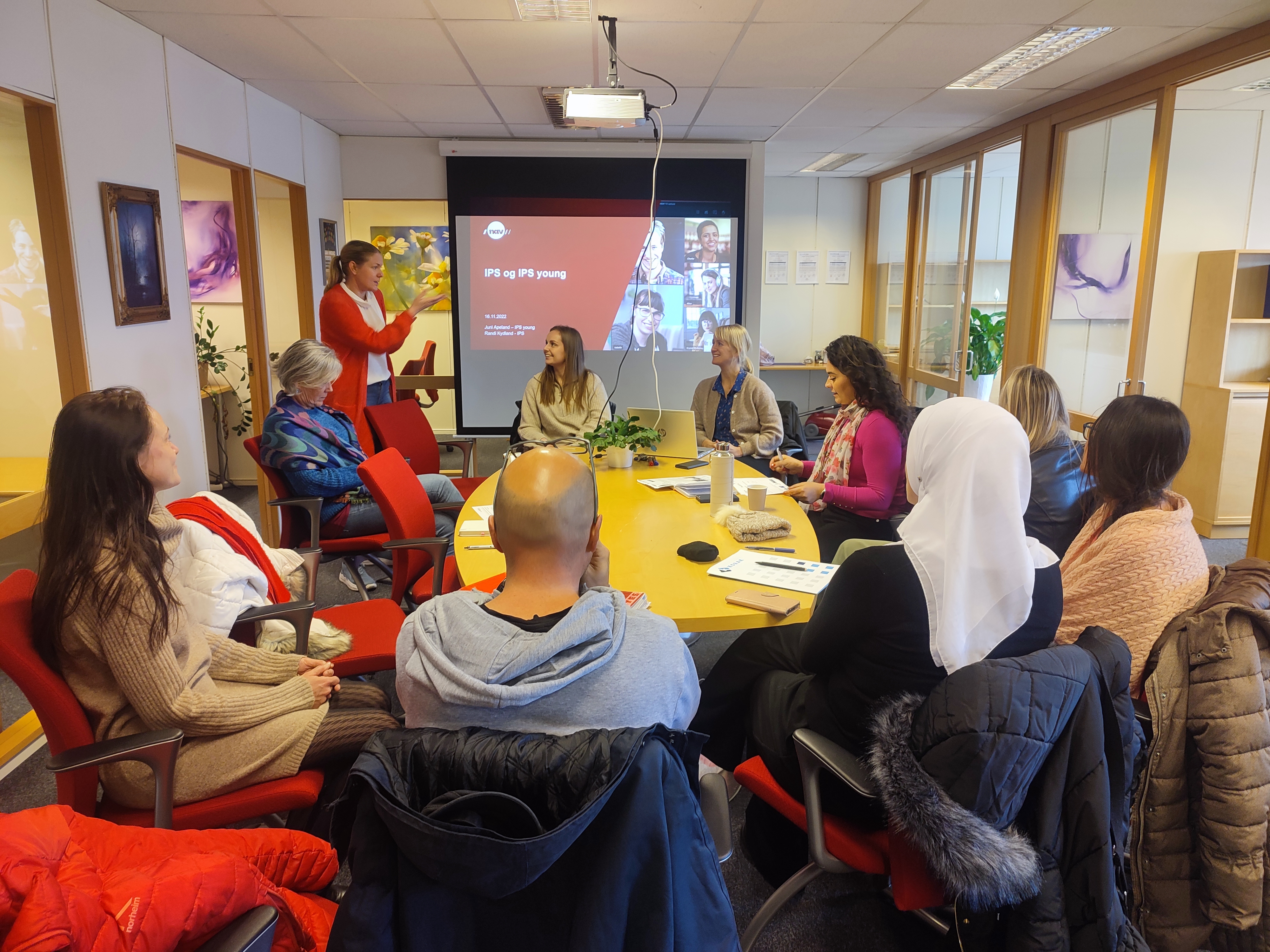
5 January 2023 – At the end of 2022, Slovenian project partners participated in a study visit to Stavanger, Norway, in the framework of the project Empowerment and Integration of NEETs into the Labour Market and Development of a Comprehensive Program of Support Services for NEETs, Including the Solutions on Systemic Level (PreseNEETi se).
The Norwegian project partner, Veiledernettverket NOSCO/Norwegian Organisation for Supervision and Co-Operation, prepared a varied programme for the participants, which gave them an insight into good practices in working with young school dropouts and prisoners (The Ullandhaug Organic Farm Foundation, NAV Eiganes and Tasta, TAFU Rogaland, UngInvest Rogaland, Metropolis, Fellesverket/Red Cross, Fra offer til kriger, IPS – Ung). Programmes and methods for working with these target groups were presented, and the importance of the trust that needs to be established between clients and counsellors in order to be successful. The individual orientation of the programme for each participant, based on his/her wishes, goals and abilities, and leading to employment as the final goal, were repeatedly highlighted.
The NEET research was presented via video by Tonje Fyhn, Director of Worklife and Inclusion, NORCE Research and a report on the analysis of the current situation in Slovenia and Norway was presented at the press conference.
The study visit to Norway and learning about good practices further strengthened the bilateral cooperation between the Norwegian and Slovenian project partners.
Find out more about the project PreseNEETi se, implemented under the programme Education, Scholarships, Apprenticeship and Youth Entrepreneurship, at this link.
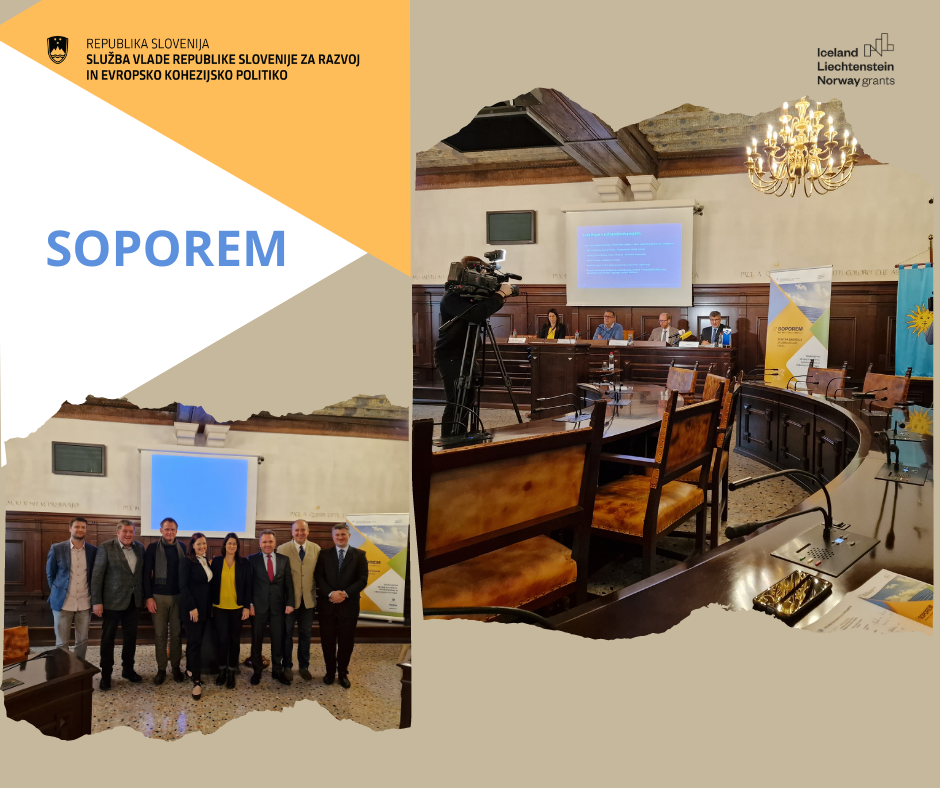
15 December 2022 – A press conference and a round table were held in the Praetorian Palace in Koper to present the project Solar Energy for Emissions Reduction (SOPOREM), co-financed under the Climate Change Mitigation and Adaptation programme.
The project brings together the Port of Koper as project promoter and project partners the Municipality of Koper and Greenstat ASA from Norway.
The SOPOREM project aims to promote the production of electricity from renewable sources in the port of Koper and in the Municipality of Koper through the construction of two solar power plants that will help reduce the carbon footprint and contribute to the reduction of emissions and greenhouse gases. The general goal of the project is thus to increase the production of renewable energy.
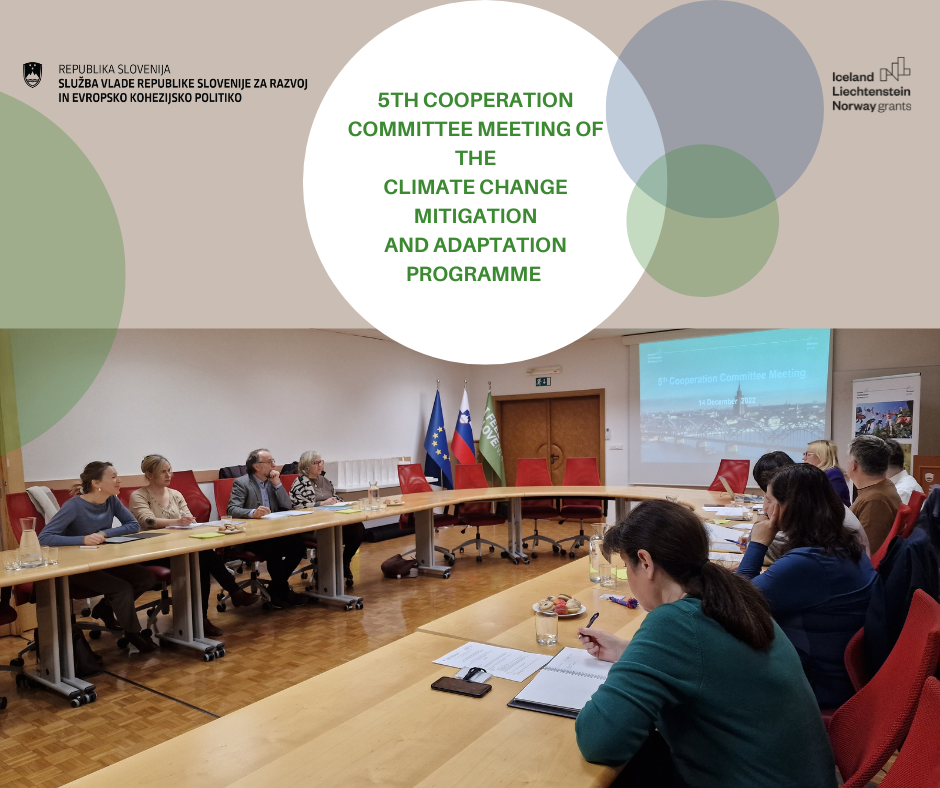
14 December 2022 – The fifth meeting of the Cooperation Committee for the programme Climate Change Mitigation and Adaptation took place in Ljubljana.
The meeting was attended by representatives of the Programme Operator and the Donor Programme Partner (NEA – Norwegian Environment Agency), as well as representatives – observers from the Royal Norwegian Embassy in Budapest, the Financial Mechanism Office and the National Focal Point.
Participants discussed the programme’s progress, in particular the implementation of projects selected under the call for proposals, proposal of the bilateral initiative and financial resources allocated to the programme under the Fund for Bilateral Relations.
The participants also listened to the project promoters of the projects StudiKROG and SmartMOVE, who presented the progress in their implementation.
More about the programme Climate Change Mitigation and Adaptation is available at this link.